9th December, 2025
Shipping can make or break your Shopify store’s success. Even if you have the most amazing products, a slow, error-prone, or expensive fulfilment process can turn customers away. Choosing the right shipping app is critical. The right solution not only helps you print labels and track parcels it can also automate routine tasks, reduce errors, improve the customer experience, and even save you money in the long run.
With so many options out there, you might be wondering: Where do I even start? It can definitely feel overwhelming. One key factor to consider is how each app handles shipping rates and labels. Some platforms require you to purchase labels through them using their pre-negotiated rates (essentially acting as a middleman or reseller of courier rates). That can be convenient if you don’t have your own carrier accounts, but it might get expensive or restrictive if you do have your own discounted rates or need a carrier they don’t support. On the other hand, some apps let you plug in your own carrier accounts and rates right out of the box (and may also offer their own discounted rates as an option). That flexibility can keep costs lower and give you more control. We’ll note these differences as we go through the list.
This guide will highlight the top 10 shipping apps for Shopify as of late 2025, looking ahead into 2026. We’ll dive into each app’s strengths, potential pitfalls, and the types of businesses they fit best. We’ve also included a secondary list of rising new apps (and regional solutions) for merchants who want to explore fresh approaches. Let’s get started!
Voila Shipping App: The Fast Lane for SMB & Mid-Market Shipping
Voila is one of the newest shipping apps on Shopify but it already feels like the tool many merchants have been waiting for. Built from the ground up with automation and multi-courier logic at its core, Voila lets merchants set up smart shipping rules in minutes. Whether you route orders based on tags, weight, order value, SKU type, or delivery zone, Voila automatically selects the best courier service every time.
Everything happens inside Shopify: batch label creation, courier routing, fulfilment updates all streamlined into a single, fast workflow. No exporting orders, no juggling multiple dashboards, no messy integrations. It simply works.
Even though it's a newer app, early adopters consistently praise its clean, Shopify-native interface and ease of adoption, especially compared to legacy tools. And because Voila connects with 150+ global and regional couriers, merchants can plug in their own carrier rates, mix in reseller rates where helpful, and avoid the lock-in or extra fees common with rate-reseller platforms like ShipStation.
For growing Shopify brands, Voila offers exactly what traditional tools haven’t:
automation without complexity, flexibility without hidden costs, and scalability without technical overhead.
If you’re an SMB or mid-market brand looking to modernise fulfilment without overhauling your tech stack, the Voila Shopify App is the fast lane to simpler, smarter shipping.
However, for larger merchants, 3PLs, marketplaces, and SaaS platforms that need deeper control, Voila offers a full multi-carrier shipping API and enterprise-grade carrier management platform the same infrastructure powering its Shopify app, but delivered as a standalone service.
This is where Voila moves beyond “shipping app” territory and becomes a logistics connectivity layer for complex fulfilment environments.
Through a single API integration, enterprise teams can:
Connect instantly to 150+ couriers across parcel, freight, regional, and cross-border networks
Generate labels at scale
Build custom rules and routing logic directly into their OMS, WMS, ERP or marketplace platform
Leverage unified tracking, webhooks, and post-purchase event feeds
Manage multi-location fulfilment or multi-tenant 3PL operations
Onboard new couriers in minutes, not months
Branded tracking pages that platforms can embed into their own storefronts
Post-purchase notifications, SMS or email, driven by live courier events
WISMO reduction tools, giving support teams live shipment insight
Return and exchange handling, with automated courier selection for returns
This is the same technology used by logistics providers, 3PLs, and large-volume eCommerce brands who want full control of shipping logic without maintaining dozens of direct courier integrations.
In other words: Voila gives enterprise teams the flexibility older platforms can’t, without the engineering burden they dread.
From Shopify startups to multi-warehouse fulfilment networks, Voila provides the same core advantage:a single, unified shipping engine built for modern commerce, not legacy workflows.
ShipStation
ShipStation is a veteran in the Shopify shipping ecosystem and a popular choice for merchants. It supports multiple carriers and offers robust features for bulk fulfilment, which has made it a go-to for many large stores and operations. You can connect various sales channels to ShipStation, and it will help you organise orders and print labels in batches, saving time when you’re shipping out hundreds of packages.
However, it’s not all smooth sailing with ShipStation. Shopify user reviews are mixed, and many merchants report a few consistent pain points: slow customer support, some occasional technical hiccups (for example, issues with customs documentation on international shipments), and surprise charges. ShipStation often encourages you to buy postage through their platform (using their discounted carrier rates). If you try to use your own carrier accounts with your negotiated rates, you might encounter extra fees (they’ve even introduced per-label charges in such cases). These costs can add up, making ShipStation more expensive than expected, especially if you prefer managing your own carrier relationships or need a carrier that isn’t in ShipStation’s built-in network. It also works in a separate interface to Shopify which isn't ideally for brands not wanting to do tab hopping. In short, ShipStation can be a great tool it’s feature-rich and battle-tested but you need to be prepared to manage its complexities and budget for its cost structure. For merchants who can overlook the challenges, ShipStation still offers a lot of muscle to handle the heavy lifting.
EasyShip
Easyship excels when it comes to international shipping. This app provide live courier rates at checkout, automatically generating customs documentation, and calculating duties and taxes (landed costs) upfront. With Easyship, even a small business can tap into pre-negotiated rates for international couriers, which can save money and transit time for your faraway customers.
Many users praise Easyship’s broad functionality and the convenience of its all-in-one dashboard. That said, there are a few cautions to note. Some merchants report limitations with certain carriers or account integrations, and software glitches, especially when managing complex international logistics (think multiple packages, warehouses, or unusual destinations). Also, keep an eye on the pricing model: Easyship is primarily a rate aggregator (you don’t need your own courier accounts for most services, since they offer their discounted rates). If you do choose to connect and ship with your own carrier account through Easyship, they typically charge a per-label fee (depending on your plan) for that privilege. It’s not a deal-breaker, but it’s a cost to be aware of if you have high volume on your own rates. Overall, Easyship can be a good solution for businesses aiming for global reach with clarity on shipping costs. It simplifies a lot of the hard parts of international fulfilment, as long as you’re okay with its specific carrier support and the potential fees associated with how you use it.
Shippo
If you’re looking for simplicity, Shippo might be your answer. Shippo is known for its straightforward approach: it provides easy label creation and supports multiple carriers without a lot of complicated bells and whistles. There’s a well-documented API, which makes Shippo popular among developers and smaller merchants who want to build custom shipping workflows or integrate shipping directly into their own systems.
The strengths of Shippo lie in its ease of use. For a small store or a business just starting to add shipping automation, Shippo's dashboard is clean and the learning curve is minimal. You can connect common carriers (like USPS, UPS, FedEx, DHL, etc.), compare rates, and print labels one by one or in batches. However, as with any tool, there are some downsides reported by users. Shopify reviews have highlighted concerns about billing clarity and support responsiveness – for instance, understanding Shippo's pricing (they have a free tier that charges per label, around 5¢ each, and subscription plans to eliminate per-label fees) can be a bit confusing at first. Some merchants also mention occasional label generation errors or hiccups in the platform, which can be frustrating if you're in a hurry.
Shippo is ideal for small stores or developers who want minimal overhead and a plug-and-play solution. It’s especially cost-effective if your shipping volume is low to moderate – you can pay per label without committing to a high monthly fee. But if you start shipping at a high volume or need more complex automation, you may find Shippo’s simplicity becomes a limitation. In a high-volume scenario, the per-label fees and basic feature set might prompt you to upgrade to a more robust plan or even switch to a different platform. In summary, Shippo keeps shipping uncomplicated and accessible, but it may not scale up to the needs of very large or complex operations.
ShippingEasy
As the name suggests, ShippingEasy aims to make shipping straightforward and (mostly) hassle-free. It strikes a balance between functionality and usability, positioning itself as a solid choice for small to mid-sized merchants who want capable features without a steep learning curve. With ShippingEasy, you get all the core tools you’d expect: you can print shipping labels (individually or in batches), handle orders from multiple stores, set up basic automation rules, and even manage some inventory or product details. It covers the day-to-day shipping tasks in a way that’s approachable for non-technical users.
One of the nice things about ShippingEasy is that it comes with built-in access to discounted shipping rates through its One Balance program (since it’s part of the Stamps.com family, like ShipStation). For example, you can use their pre-negotiated USPS and UPS rates out of the box, which is great if you haven’t negotiated your own deals with carriers yet. If you do have your own carrier accounts, ShippingEasy lets you connect them – but note that this requires a paid add-on depending on your plan. In other words, using your own carriers is possible, but it comes with an extra monthly fee (scaling by plan level) to unlock that feature. This setup reflects a common theme with older shipping software: they often monetise either through label sales or by charging for the ability to use external rates.
Feature-wise, ShippingEasy isn’t as advanced as some enterprise or high-end solutions you won’t find the very granular automation or complex conditional logic that some bigger systems offer, and its interface is more utilitarian than “slick.” It also doesn’t focus on real-time checkout rates or post-purchase tracking as some specialised apps do (you might pair it with those if needed). However, it provides reliable, everyday shipping workflows that just work, and it doesn’t require much technical expertise to get going. For many small businesses, that reliability without much fuss is a worthy trade-off. In short, ShippingEasy is a dependable middle-of-the-road choice: it covers the basics very well and keeps things easy, as long as your needs are fairly standard. If your operation grows in complexity, you might outgrow it, but it can take you a long way before that happens.
AfterShip
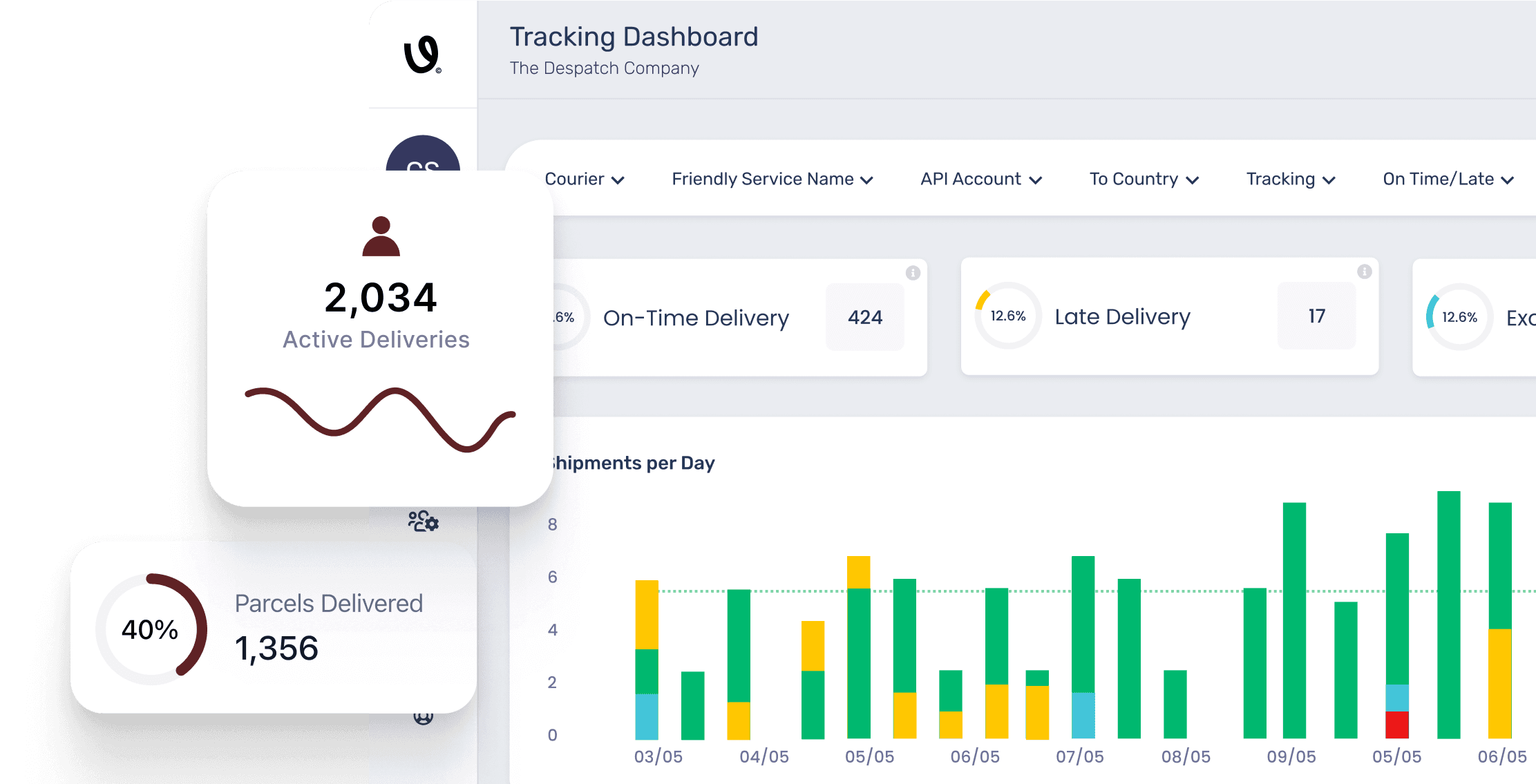
AfterShip isn’t about printing labels or choosing carriers – it’s all about what happens after you ship. This app focuses on post-purchase tracking and customer notifications, which can really enhance your buyers’ experience once their order is on the way. With AfterShip, you can provide customers with a branded tracking page, so instead of sending them to a generic carrier website to track their package, you send them to a page that has your logo, your voice, and sometimes even marketing content or product recommendations. It makes the tracking experience feel like an extension of your store.
It’s important to note that AfterShip is not a full shipping solution on its own. You can’t use AfterShip to print labels or choose shipping services for sending out orders. Instead, you’d use AfterShip alongside your main shipping/fulfilment app. Think of it as a complement: your shipping app handles getting orders out the door, and AfterShip handles keeping customers in the loop until those orders arrive. For merchants who really prioritise customer communication and a premium post-purchase experience, AfterShip is a powerful add-on. Just remember you’ll still need a primary app (like one of the others on this list) to deal with the actual shipping part of the equation.
ShipperHQ
For merchants with really complex shipping rules and needs, ShipperHQ is a tool worth knowing about. It’s a bit different from the other apps on this list in that it doesn’t print labels or manage fulfilment; instead, ShipperHQ works primarily at the checkout level to present the right shipping options and rates to your customers. Essentially, it’s a shipping rate management and rules engine.
What can you do with ShipperHQ? A whole lot, if your business demands it. You can set up precise rules for how shipping is calculated: for example, you might offer different shipping methods based on product type, destination, delivery date, or even custom attributes. If you ship from multiple warehouses or drop-ship from different vendors, ShipperHQ can factor that in and show accurate rates or split shipments accordingly. It handles things like dimensional weight calculations, blackout dates, carrier restrictions (say you don’t want to ship certain products by air, or you need to use a specific courier for certain regions), and much more. Basically, it gives you fine-grained control over what shipping options appear to whom, and at what price, during checkout.
Now, all that power comes with a couple of caveats. First, ShipperHQ requires some configuration expertise. It’s a robust platform, which means there’s a learning curve to set up all your rules correctly. It’s often used by larger businesses that have dedicated operations or development teams, though determined smaller merchants can use it too if they invest the time. Second, remember that ShipperHQ doesn’t handle the actual label printing or order dispatch you’d use it in combination with a fulfilment app. For instance, ShipperHQ might present the customer with “UPS Ground” or “Free Local Delivery” options at checkout based on your rules, but after the order is placed, you’d then use another app (or your warehouse system) to actually process and ship the package via UPS or your local courier. In summary, ShipperHQ is best suited for businesses that have diverse product sizes, multiple shipping origins, or advanced checkout requirements that go beyond Shopify’s native shipping settings. It’s a powerful tool to optimise the choices you offer to customers, ensuring you don’t overcharge or undercharge for shipping and that you meet complex delivery promises. Just be prepared for a more hands-on setup process, or consider hiring an expert to configure it to match your needs.
Parcel Panel
Like AfterShip, Parcel Panel zeroes in on the post-purchase experience, specifically tracking and transparency for your customers after you’ve shipped their orders. In today’s world, customers love being in the loop – they want to know exactly where their package is and when it will arrive. Parcel Panel helps you deliver that information in a way that’s convenient and branded for your store.
With Parcel Panel, you can send out real-time tracking notifications to your customers, similar to AfterShip. It also lets you set up a branded tracking page on your website. So instead of giving customers a raw tracking number and making them figure out which carrier site to visit, you simply direct them to your own tracking page powered by Parcel Panel. They’ll see the latest status of their shipment, and you can customise the page to show your brand’s style and even marketing messages or FAQs (like “What to do if your package is delayed,” etc.). Additionally, Parcel Panel provides you, the merchant, with delivery performance insights. You can monitor if packages are getting delayed frequently, or if one carrier is underperforming, which is useful data for refining your shipping strategy.
It’s important to clarify that Parcel Panel, much like AfterShip, does not handle label printing or fulfilment tasks. It won’t help you choose a carrier or create a shipping label you’ll need a different app for the shipping execution. Parcel Panel’s role starts after the shipment is created. It’s best used as a complementary tool to elevate customer satisfaction and trust after an order has been shipped. If you pair Parcel Panel with a solid shipping app, you get the best of both worlds: efficient fulfilment and happy, well-informed customers.
Regional Integrators
Sometimes, the best shipping solution is one that’s built specifically for your region or local carriers. Regional integrator apps cater to merchants shipping within certain geographies, and they can be highly effective if your business is focused in those areas. These apps typically connect you with local couriers, postal services, or region-specific shipping services that the big global apps might not support as deeply.
For example, consider Shiprocket for India and parts of the Asia-Pacific region. Shiprocket integrates a network of local carriers and even offers features tailored to those markets (like COD – cash on delivery – support, which is very prevalent in India). By using a regional app like this, a merchant in that region might get better shipping rates, improved pickup scheduling, or more reliable service because the app developers understand the local shipping landscape intimately. Another example: in Latin America or Europe, there are regional apps and platforms that connect to domestic postal services or local last-mile delivery startups that aren’t on the radar of a generic app.
The advantage of regional integrators is that they excel in their target markets. They can greatly simplify logistics for merchants operating in one country or region, often providing a level of carrier integration and rate competitiveness that a broader app can’t match in that specific context. The potential downside is that these tools may be limited if your business expands globally. A tool that’s awesome for domestic India shipping might not help you at all if you suddenly start shipping to Europe or North America, for instance. You might end up needing a different solution for those new regions, which means juggling multiple apps.
In summary, if your store primarily serves a specific country or region, it’s worth checking if there’s a shipping app tailored to that locale – it could give you an edge in cost and reliability. Just plan ahead for how you’ll handle shipping if you broaden your reach beyond what that regional app covers.
Helm WMS
As brands scale, shipping apps alone often aren’t enough. Faster fulfilment, smarter picking, and tighter operational control become just as important as courier automation. That’s where Helm WMS comes in a warehouse management system built specifically for high-growth eCommerce brands and 3PLs that need speed, accuracy, and operational visibility across the entire fulfilment process.
Helm gives Shopify merchants and fulfilment teams:
Optimised digital picking
Container picking, batch picking, wave picking, and priority-driven pick routes that massively reduce travel time and mis-picks.
Real-time inventory accuracy
Live stock updates across multiple locations, automated replenishment logic, and warehouse-level traceability.
Fast goods-in processing
Receive containers, bulk stock, and purchase orders with high accuracy and zero paperwork chaos.
Hands-free automation
Rules that trigger actions like pick generation, replenishment, order prioritisation, and courier selection.
Integrated packing & dispatch workflows
Scan-to-pack, verification screens, error-proofing, and direct label printing powered by Voila’s multi-carrier engine.
Post-purchase visibility for the whole operation
Every order tracked from goods-in to delivery, including exception alerts, delivery KPIs, and courier performance insights.
Many brands discover that once volume increases, the bottleneck isn’t the shipping app it's the warehouse processes feeding it. Helm solves that by turning fragmented, paper-driven workflows into a single unified fulfilment engine.
Rising & Emerging Shopify Shipping Apps
The world of Shopify shipping apps is not static – new players are always entering the scene, aiming to solve pain points that older tools might have overlooked. Lately, a number of newer apps have started gaining attention, especially among merchants who feel the legacy platforms are too clunky, too expensive, or just not keeping up with modern needs.
These rising platforms often focus on simpler automation, region-specific carriers, or more modern user interfaces. They can be great for stores that want to try a fresh approach to fulfilment. Here are a few notable ones making waves:
Sendcloud
A rapidly growing option in Europe, Sendcloud has become popular for its straightforward label creation and broad coverage of regional carriers. European merchants appreciate that it easily connects to local delivery services as well as big global couriers.
The app's interface feels more contemporary and user-friendly compared to some older multi-carrier tools. Its strongest features are centred on EU fulfilment things like printing labels for DHL, DPD, Chronopost, PostNL, etc., with ease. It also provides an integrated tracking portal for customers. Keep in mind, Sendcloud is very Europe-focused; if you're shipping beyond Europe, it may not support all the carriers you need globally.
Veeqo Shipping
Veeqo has been around for a bit, but it's continuing to evolve and gain users, especially after being acquired by Amazon. Its appeal lies in attempts to unify inventory, order picking, and shipping under one roof. For merchants selling across multiple channels (Shopify, Amazon, eBay, etc.), Veeqo serves as an all-in-one inventory and fulfilment management system.
You can manage stock, pick/pack orders, and then ship out through various carriers using Veeqo. This integrated approach can be a big efficiency booster if you struggle with keeping inventory in sync across platforms. However, some users feel that Veeqo’s shipping interface still carries the DNA of traditional warehouse software meaning it can be a bit complex or old-school in design.
Choosing the Right Shipping App
So, how do you choose the right shipping app for your Shopify store? The best choice comes down to the complexity of your operation today, your growth plans, and which pain points you most urgently need to solve. Here are some scenarios to help you decide what might work for you:
If you’re shipping internationally or selling on multiple channels:
Look into more robust platforms like Helm WMS, ShipStation or Easyship. They offer broader carrier coverage (and in ShipStation’s case, the ability to handle orders from several sales channels in one place). These will give you more power and flexibility for global shipping – like handling different carriers, generating customs forms, and syncing orders from Amazon, eBay, etc. Just be aware that they come with more complexity (and potentially higher costs or fees) as you start using advanced features. They’re great for growth, but make sure you’re ready to manage the learning curve and expense that can come with them. If your international shipping also involves very special rate calculations (say you need custom checkout rates for various scenarios), you might even pair one of these with a rate management tool like ShipperHQ to fine-tune what customers see at checkout.
If your top priority is the post-purchase customer experience:
A dedicated tracking app such as Voila, AfterShip or Parcel Panel can be a game-changer. These will keep your customers happy by providing timely updates and a branded tracking experience. Use one of them alongside a shipping/fulfilment app. For example, you might use ShippingEasy to handle the label printing and dispatch, and AfterShip to handle notifications and tracking pages. This combo ensures you're efficient internally and keeping customers informed externally. It's a bit of an extra step to use two apps, but if customer satisfaction and reduced support tickets are important to you, it's worth it.
If you have very complex or enterprise-level logistics needs:
You may need to invest in an enterprise-grade solution like Voila or StarShipit, or at least a combination of tools that cover all bases. High-volume shippers or companies with multiple warehouses and intricate rules often end up here. An enterprise solution will allow you to automate on a grand scale and customize almost everything but it will demand more time and money to implement. The right approach in this scenario really depends on your specific operation. Just remember that whatever you choose should be able to scale with you and not become a bottleneck.
No matter which category you fall into, a universal truth reveals itself as you grow: shipping isn’t just about printing labels anymore. It becomes about working smarter – reducing manual decisions, maintaining accuracy during rush periods, and making sure every order is sent in the most efficient way without you having to constantly watch over it. Many of the older or more basic solutions require a lot of hands-on work (or multiple different apps strung together), which can lead to mistakes or slowdowns when order volume spikes. This is where the newer, automation-focused apps really start to shine and pull ahead of the pack.
Among those, we've found that Voila truly stands out. It's built specifically for modern Shopify merchants who want to simplify multi-courier shipping while staying inside Shopify's familiar interface. With Voila, you're essentially turning Shopify into your all-in-one order and shipping management system (often called an OMS when it's at enterprise scale). The app eliminates a ton of repetitive admin work: you define your shipping rules once, and then Voila applies them consistently without you having to think about it every time. Need to automatically use DHL for international orders over £200, or want to use your own FedEx account for overnight shipments? Set it in Voila and it just happens. The result is that your fulfilment process stays fast and predictable, even as you handle more orders or add new carriers.
What’s refreshing about Voila is its clean, flexible approach compared to many legacy systems. It’s not trying to bolt a clunky external software onto Shopify. Instead, it feels like a natural extension of your Shopify admin. You don’t have to export orders to another platform or copy-paste information between systems Voila keeps everything under one roof. This native integration means fewer errors and a simpler workflow for you and your team. And unlike some older apps that might lock you into using their courier accounts or charge extra fees here and there, Voila gives you the freedom to connect your own carriers or use its multi-courier network as you see fit, without hidden costs popping up.
Yes, Voila is relatively new, but that’s actually part of its strength – it was built with today’s challenges in mind, not those of a decade ago. It’s designed to be current and future-ready, so you’re not adopting a system that already feels outdated. Early users have been impressed, and it’s quickly becoming a compelling choice for Shopify store owners who are tired of patching together solutions or fighting against the limitations of older software.
Bottom line:
When choosing your shipping app, think about where your business is headed. Pick a solution that not only fits your needs today but will also support your growth tomorrow. Whether you start simple or dive into an advanced platform, keep an eye on how the app handles your carrier rates, how much manual work it saves you, and how well it integrates with Shopify. And if you want a platform that feels modern, natural to use, and scalable, give Voila a serious look – it just might be the shipping upgrade your Shopify store has been waiting for. Happy shipping!
Join the brands who've simplified fulfilment without changing their stack.
Contact us today and sprinkle some Voila on your logistics.